
Tree Protection Rules Every Atlanta Builder Should Know
Atlanta is fiercely protective of its urban tree canopy, and for builders in Metro Atlanta, this means the tree protection ordinance is as critical as zoning and building codes. Failing to understand or properly implement the rules set by the City of Atlanta Arborist Division can lead to immediate Stop Work Orders, massive recompense fees, and the suspension of your ability to secure future building permit consulting Atlanta approvals.
If you are a developer, contractor, or homeowner embarking on a construction project, compliance with tree regulations is not optional. At Radovic Permits, we specialize in coordinating with the Arborist Division, ensuring your project minimizes impact and adheres to all local rules. We are the trusted permit consultant Metro Atlanta companies rely on to protect both their profits and the canopy.
The Fundamentals of Atlanta's Tree Ordinance
The core policy of the City of Atlanta’s Tree Protection Ordinance is simple: there shall be no net loss of trees within the boundaries of the City. This policy dictates every requirement, from permitting to replanting.
The Protected Tree Definition
The ordinance requires a permit to remove, destroy, or injure any tree on private property that is 6 inches or greater in diameter-at-breast-height (DBH). For pines, this threshold is often 12 inches DBH.
No Exceptions: Unlike some jurisdictions, the City of Atlanta requires a permit for removal, even if the tree is dead, dying, diseased, or hazardous (DDH).
Specimen vs. Priority Trees: The ordinance distinguishes between tree values. Priority Trees (highest value based on size and species) carry significantly higher replanting and recompense requirements if removed, making their preservation a top priority during site design.
The Two Paths to Tree Removal Approval
Tree removal associated with development is managed through the building permit process, which follows a strict notification and review schedule.
1. Plan Submittal and Review: Tree removal plans are submitted concurrently with your building plans. The Arborist Division reviews the plan to ensure tree impacts are minimized "to the maximum extent feasible."
2. Public Notice and Appeal Period: Once preliminary approval for tree removal is granted, a sign is posted on the property (often yellow or orange) announcing the decision. This triggers a short public appeal period (typically 5 business days). Builders must be aware that neighbor disputes and appeals are common in Atlanta, and a filed appeal can delay the issuance of your overall building permit consulting Atlanta project until a hearing is held.
Essential Builder Compliance Checklist
Every builder must implement specific measures before, during, and after construction to protect preserved trees and avoid fines.
Pre-Construction Requirements
Tree Survey: A detailed, scaled survey identifying the location, species, and size (DBH) of all protected trees on site.
Arborist Consultation: For projects that require new commercial building permits Atlanta or substantial residential work, early consultation with a Registered Arborist is necessary to design around protected trees and secure preliminary approval.
Critical Root Zone (CRZ) Protection

The CRZ is the area beneath the tree that must be protected from disturbance. It is generally defined by a radius of one foot for every inch of DBH (e.g., a 20-inch tree requires a 20-foot radius of protection).
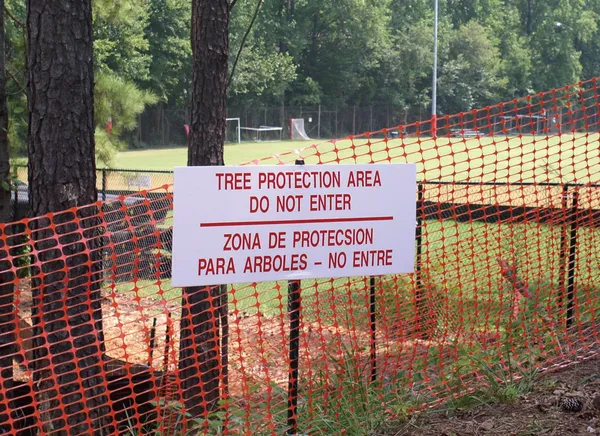
Tree Save Fencing: Before any land disturbance, clearing, or grading begins (and prior to your pre-construction meeting), protective fencing must be installed around the CRZ of all preserved trees. For commercial projects and single-family front yards, the Arborist Division often mandates hard fencing (chain-link or wood) rather than simple plastic mesh.
Prohibited Activities: Absolutely no grading, paving, storage of materials, concrete washout, parking, or staging of equipment is allowed within the CRZ. Violating this rule is the most common cause of Stop Work Orders and a tiered fine system for construction site violations.
Replanting and Recompense
If the removal of a healthy, protected tree is approved, the builder must meet the "no net loss" policy through a combination of replanting and monetary recompense.
Replacement Requirement: Builders must plant replacement trees, with the required caliper based on a formula tied to the size and priority status of the removed tree. Planting trees is incentivized, often giving builders a credit multiplier (e.g., 1.25 times the size planted) to reduce the overall obligation.
Recompense Fee: If on-site planting cannot satisfy the replacement requirement, the remaining obligation is paid into Atlanta's Tree Trust Fund. This fee can be substantial, making preservation the financially smarter choice.
Navigating County-Specific Rules and Conflicts
While the City of Atlanta has the strictest rules, builders must also be aware of varying regulations in the surrounding counties.
Fulton County (Unincorporated): Requires an Arborist Site Visit and Report as part of the LDP submittal. They have a specific Specimen Tree definition (e.g., 27-inch DBH hardwoods).
DeKalb County: Focuses on maintaining a certain level of overall tree cover for new developments and imposes strict requirements before land disturbance permit Atlanta applications are approved.
For complex projects that may involve special use permit Atlanta applications or detailed zoning research Atlanta, coordinating these documents with the Arborist Plan Review staff is essential to ensure that tree impact is considered upfront, avoiding mid-project setbacks.
Why Expert Permitting is Essential
Atlanta’s tree regulations are highly subjective and intensely enforced. Mistakes—whether it’s failing to install the correct fencing or miscalculating tree recompense—will halt your construction.
Radovic Permits serves as your liaison, managing the entire tree permit cycle, coordinating with the City Arborist, and ensuring your plans are optimized for minimal tree impact and full compliance. Don't risk a Stop Work Order over a fence or a fee. Partner with the top permit consultant Metro Atlanta has to offer and keep your project on schedule.